Skip to content
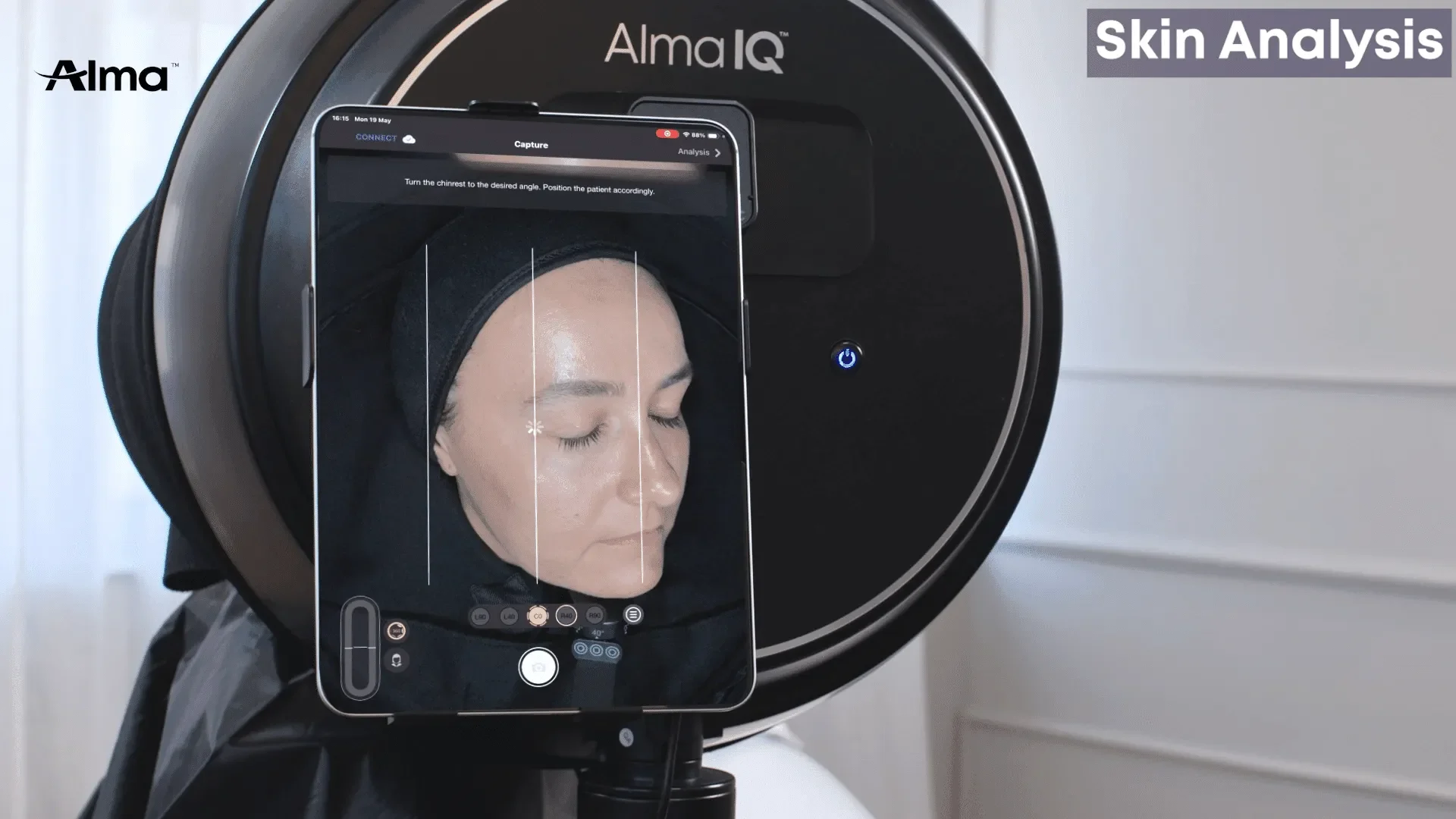
Table of Contents
You’ve tried the serums. You’ve adjusted your routine. Maybe you’ve even had a treatment or two. And yet, those enlarged pores and that stubborn uneven texture are still staring back at you in the mirror. It’s frustrating, especially when you can’t quite pinpoint why nothing seems to be working.
Here’s the thing: what you see on the surface is rarely the whole story. At Diamond Advanced Aesthetics in New York, NY, Alma IQ™ Skin Analysis was built for exactly this moment. It goes past what the eye can see and gives both you and your provider a clear, accurate picture of what’s actually driving your skin concerns.
What Makes Alma IQ™ Skin Analysis Different From a Standard Skin Consultation?
Alma IQ™ Skin Analysis goes beyond a standard consultation by using multispectral light imaging to examine the skin at both the surface and deeper levels. Instead of relying purely on what a provider can observe visually, it captures high-resolution images under specialized lighting modes, including cross-polarized light, UV light, and texture and pore mapping, each one picking up on activity the naked eye would miss. Providers can see where roughness is actually sitting, how pore size shifts across different parts of the face, and whether something like inflammation or sun damage is quietly making things worse beneath the surface, all of which adds up to a much clearer starting point for figuring out what your skin genuinely needs.
What Your Skin Is Actually Telling You (And What Gets Lost Without Analysis)
Enlarged pores and rough texture aren’t random. They’re signals. Pore congestion often comes down to excess sebum, and roughness tends to trace back to collagen loss, years of sun exposure, or, honestly, a bit of both. What makes it complicated is that two people can sit in the same chair with skin that looks nearly the same and be dealing with completely different things underneath.
That’s where standard consultations fall short. A provider can only work with what they can see in the moment, and even a good one is filling in gaps with experience and judgment rather than actual data. A detailed skin health evaluation changes that dynamic. It gives your provider something concrete to reference, and it moves the conversation from “I think this might help” to “here’s what your skin is telling us.” That distinction matters, especially when you’ve already spent time and money on approaches that didn’t quite land.
How Alma IQ™ Identifies Roughness and Pore Size Beneath the Surface
So how does it actually work? Alma IQ™ Skin Analysis uses multispectral light imaging to identify enlarged pores and skin roughness in ways that standard lighting just can’t pick up on. It takes high-resolution images under several different lighting modes, and each one is looking for something specific:
- Cross-polarized light cuts through surface glare to detect visible surface irregularities, highlighting inflammation, vascular activity, and textural changes happening just beneath the skin.
- UV light captures signs of sun exposure and pigmentation shifts that may not yet be visible to the naked eye but are already influencing your skin’s surface quality.
- Texture and pore mapping produces a detailed spatial picture, showing not just that roughness is present, but where it’s concentrated, how it’s distributed, and how different areas of the face compare to one another.
The result is a comprehensive map built from your actual skin data, not a general impression.
What the Analysis Actually Shows Your Provider
Sitting across from your provider with an advanced facial imaging and skin analysis report changes the nature of the conversation. Instead of pointing to a spot on your cheek and saying “this area feels rough,” you’re both looking at the same image together, one that quantifies pore size across your full face and measures texture irregularities with clinical precision.
Your provider can see which areas have the most significant surface disruption, whether underlying inflammation is contributing to visible roughness, and what the skin looks like at a level that a standard consultation wouldn’t catch. This detailed face skin analysis becomes your baseline, a reference point that makes every future conversation about your skin more grounded and more specific.
And because you see the results alongside your provider, you leave the appointment with a clear understanding of what was found and what it means going forward.
Why Starting With a Skin Analysis Changes What Comes Next
A lot of people skip the assessment and go straight into treatment, which is understandable. But it’s also why so many end up bouncing between options without seeing the progress they expected. When roughness and pore concerns are treated without a baseline, providers are calibrating in the dark, choosing modalities, depths, and intensities based on general best practices rather than your specific skin profile.
Alma IQ™ Skin Analysis changes that. The imaging gives providers the context they need to make more targeted decisions. Whether the most appropriate path involves radiofrequency treatments like Morpheus8™, energy-based options like Exion®, or a skin health foundation through HydraFacial™, the analysis helps narrow the field based on what your skin actually needs.
Patients who start with imaging also tend to carry more realistic expectations into their treatment journey. When you can see your starting point clearly, you have a much better sense of what progress looks like and how long it realistically takes. For a session that runs about 20 to 30 minutes, the clarity it provides is worth building into any treatment plan from the beginning.
Who Benefits Most From This Kind of Assessment
The honest answer is that almost anyone dealing with persistent texture concerns can benefit from this kind of detailed skin health evaluation. That said, a few groups tend to find it especially useful:
- People who have noticed roughness or visible pores that haven’t responded to at-home care
- Patients preparing to start aesthetic treatments who want a data-driven starting point
- Anyone who has had treatments before but wasn’t sure whether they were targeting the right areas
Alma IQ™ is non-invasive, requires minimal preparation, and is appropriate for a wide range of skin types and tones, which means the barrier to getting started is genuinely low.
Ready To See Your Skin Clearly? Start Here.
If enlarged pores and uneven texture analysis in New York, NY, have been on your mind, the clearest next step is understanding what’s actually driving them. At Diamond Advanced Aesthetics, our providers use Alma IQ™ Skin Analysis to give you a complete, honest picture of your skin’s condition before recommending anything. Plan your Alma IQ™ Skin Analysis session and walk away knowing exactly where your skin stands and what it needs.